
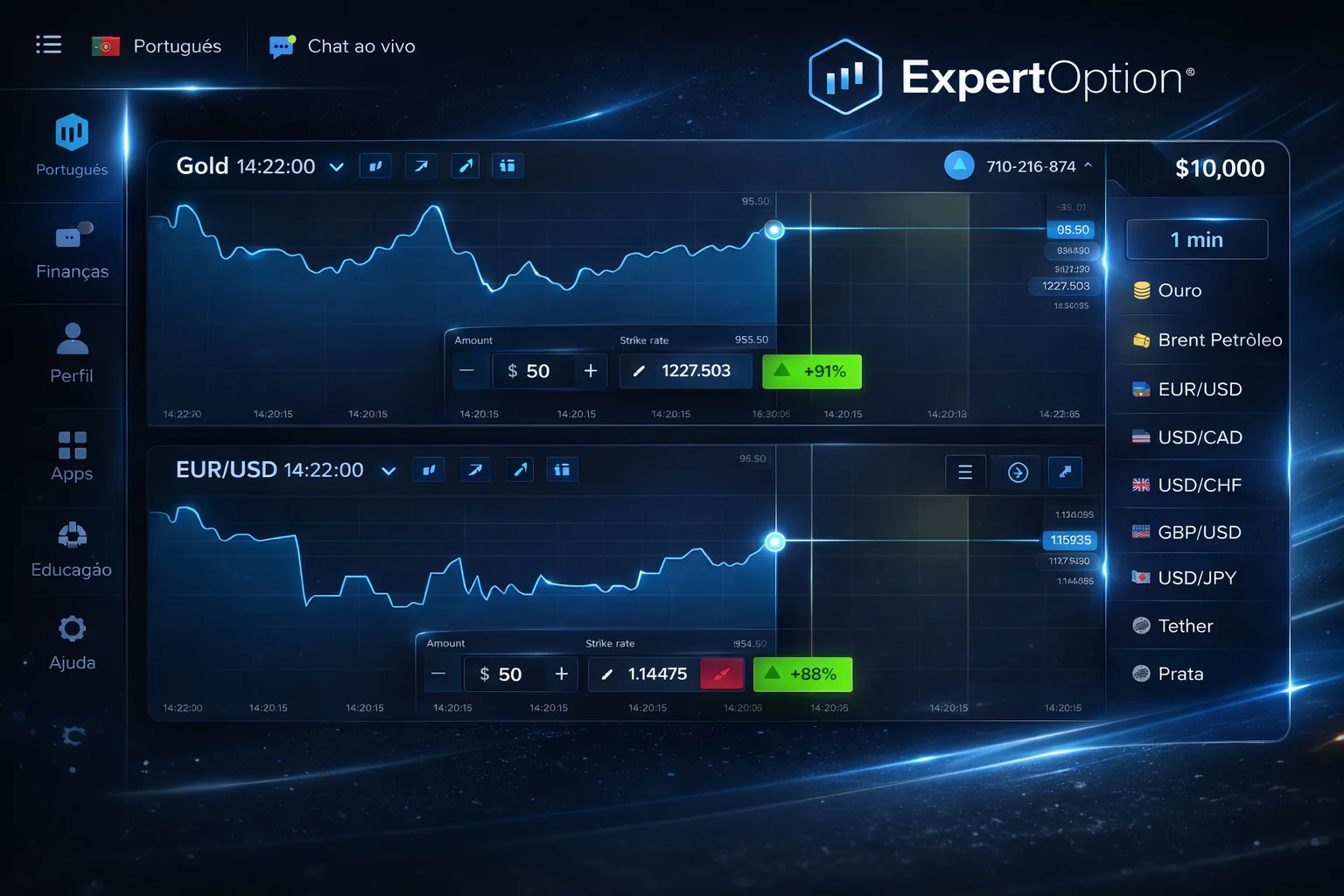
Swift Dealing for the Indian Audience
Imagine you're in Mumbai, with just ₹500 to spare and 15 minutes before your next meeting. The traditional stock market feels out of reach, but the global markets are moving. This is the scenario where quick trading platforms like ExpertOption, operational in India since 2014, find their niche. With over 70 million registered users globally, the platform offers a gateway to speculate on price movements of 100+ assets, from gold and Bitcoin to major forex pairs, with trades starting as low as $1. For Indian traders navigating time zones like IST, this model provides a condensed, accessible form of market engagement.
Benefits of the ExpertOption System
Swift dealing via ExpertOption offers several core perks built for ease of access and user comfort. The following list highlights the main advantages for Indian clients.
| Feature | Specification for Indian Traders |
|---|---|
| Minimum Commitment | Start with a $10 (approx. ₹830) deposit and place trades from $1. |
| Asset Diversity | Access 100+ instruments including forex, commodities, cryptocurrencies, and equities. |
| Potential Payout | Earn up to 95% on successful trades, which is above the industry average. |
| Local Funding | Deposit in INR using popular methods like UPI, Paytm, and local bank transfers (NEFT/IMPS). |
| Platform Access | Trade via web platform or mobile app, ranked in India's Finance category on Google Play. |
| Educational Support | Free webinars, strategy guides, and a social trading feature to follow 30 million other clients. |
| Regulatory Framework | Operates under The Financial Commission, an independent external dispute resolution body. |
Steps to Register in India
Starting your swift dealing journey with ExpertOption from India involves a simple 7-step procedure that can be finished in under 10 minutes. Use this walkthrough to begin.
- Navigate to Registration: Visit the ExpertOption website and click the 'Sign Up' button to begin your registration process.
- Enter Contact Details: Provide your active email address and create a secure password. Using an Indian mobile number is recommended for SMS alerts.
- Select Account Currency: Choose your preferred trading currency. While USD is standard, selecting INR can simplify deposit calculations.
- Verify Your Email: Check your inbox for a verification link from ExpertOption and click it to activate your account.
- Log In to Dashboard: Use your new credentials to access the client dashboard, your central hub for all trading activities.
- Complete Profile & KYC: For full functionality, complete your profile. While not always mandatory for initial deposits, verifying your identity with a PAN card and address proof aligns with good financial practice and prepares you for withdrawals.
- Make Your First Deposit: Fund your account using one of the 20+ available methods. For the fastest processing, Indian users often opt for UPI or Paytm, with funds typically reflecting in 5-30 minutes.
Selecting Your Account Type
ExpertOption structures its service around six distinct account tiers, each offering progressively enhanced features. Your choice depends on your initial deposit and desired level of support. The Basic account, accessible with just $10, provides full platform access. Upgrading to Gold or Platinum, which require higher deposits, unlocks tangible benefits like increased profit percentages (up to +4%), personal analytical signals, and even account management services. For new traders in India, starting with a Basic or Silver account to utilize the demo account and educational resources is a prudent strategy before committing larger capital.
India Payment and Payout Options
Adding funds to and withdrawing from your ExpertOption account in India is supported by numerous local and global payment options. The system imposes no charges for deposits or withdrawals, though third-party provider fees might apply. Processing durations vary by method.
| Method | Type | Processing Time (Deposit) | Processing Time (Withdrawal) | Key Notes for India |
|---|---|---|---|---|
| UPI | E-Wallet | Instant - 10 minutes | 1-3 business days | Most popular for instant INR deposits. |
| Paytm / PhonePe | E-Wallet | Instant - 10 minutes | 1-3 business days | Seamless integration for mobile users. |
| Net Banking | Bank Transfer | 15 minutes - 2 hours | 3-5 business days | Use NEFT or IMPS through your bank portal. |
| Debit/Credit Card | Card | Instant | 3-7 business days | Visa/Mastercard accepted. Subject to RBI guidelines. |
| Cryptocurrency | Crypto | 10-30 minutes (network) | 1-3 business days | For trading Bitcoin, Ethereum, etc. |
Try with a No-Risk Demo
Before risking real capital, every Indian trader should explore the platform's risk-free demo account. This feature provides a virtual balance of $10,000, allowing you to practice quick trading strategies on live market data without financial consequence. It's the perfect tool to understand trade mechanics, test the mobile app download interface, and get comfortable with tools like charts and indicators. We recommend using the demo for at least 20-30 trades to build confidence before transitioning to a live account with a minimal $10 deposit.
Tools and Guides for Achievement
ExpertOption equips traders with a suite of tools to inform their decisions. Beyond real-time charts with technical indicators, the platform offers daily market reviews and educational webinars scheduled considering various time zones. A key resource is the social trading feature, which allows you to observe and copy the strategies of experienced traders from the community of over 30 million clients. For on-the-go management, the dedicated mobile app ensures you can monitor positions and execute trades from anywhere in India, turning a smartphone into a portable trading terminal.
Activate your ExpertOption account and begin dealing with just $10.
Start Trading NowFAQ
What is the smallest deposit for ExpertOption in India?
The smallest deposit to start live swift dealing is $10, roughly ₹830. You can start practicing right away using a free demo account that needs no deposit.
Is ExpertOption lawful and secure for Indian traders?
ExpertOption functions in India and is a member of The Financial Commission, offering independent conflict resolution. The system uses SSL encryption and verified payment channels. However, as with any trading, only use funds you can afford to lose.
How many days do payouts take to Indian bank accounts?
Payout times depend on the method. E-wallet payouts like UPI typically take 1-3 business days, while bank transfers (NEFT/IMPS) may take 3-5 business days to appear in your Indian bank account.
Can I deal with cryptocurrencies on ExpertOption?
Yes, you can deal with cryptocurrencies such as Bitcoin and Ethereum among the 100+ available assets. You may also use cryptocurrencies as a payment method for deposits and payouts on the platform.
Does ExpertOption impose any hidden charges?
ExpertOption imposes no charges for deposits or payouts. A $5 fee is applied to successful deals, and a $50 account dormancy fee is charged after 3 months of no activity.